By Cathy Ye
In partnership with BCIT Alumni Relations
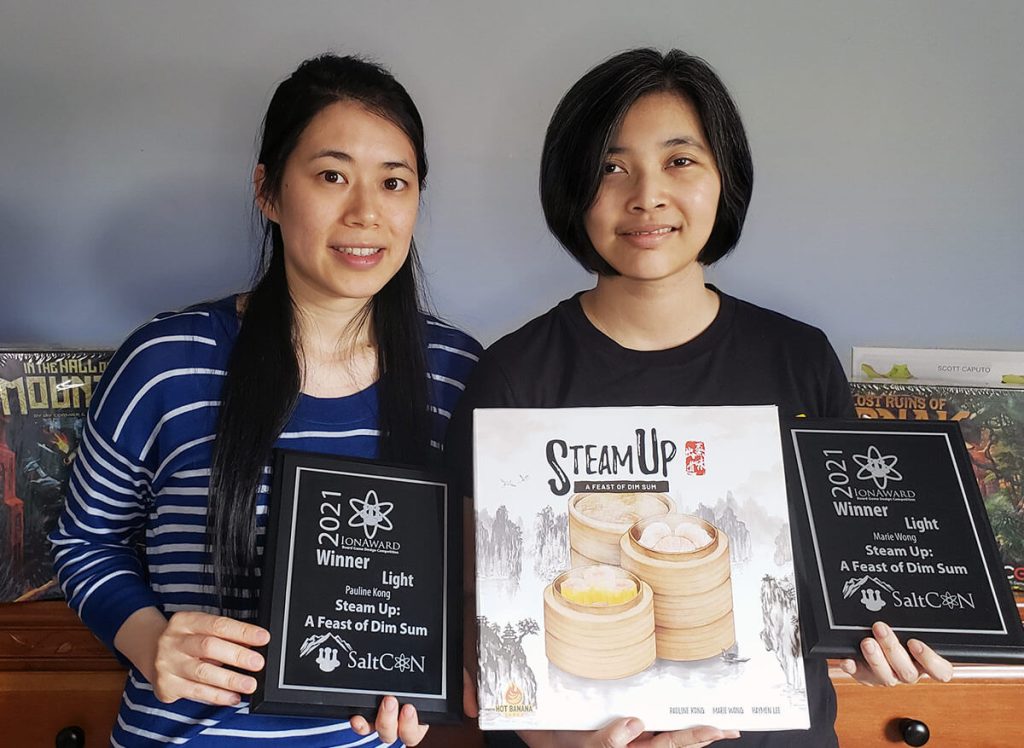
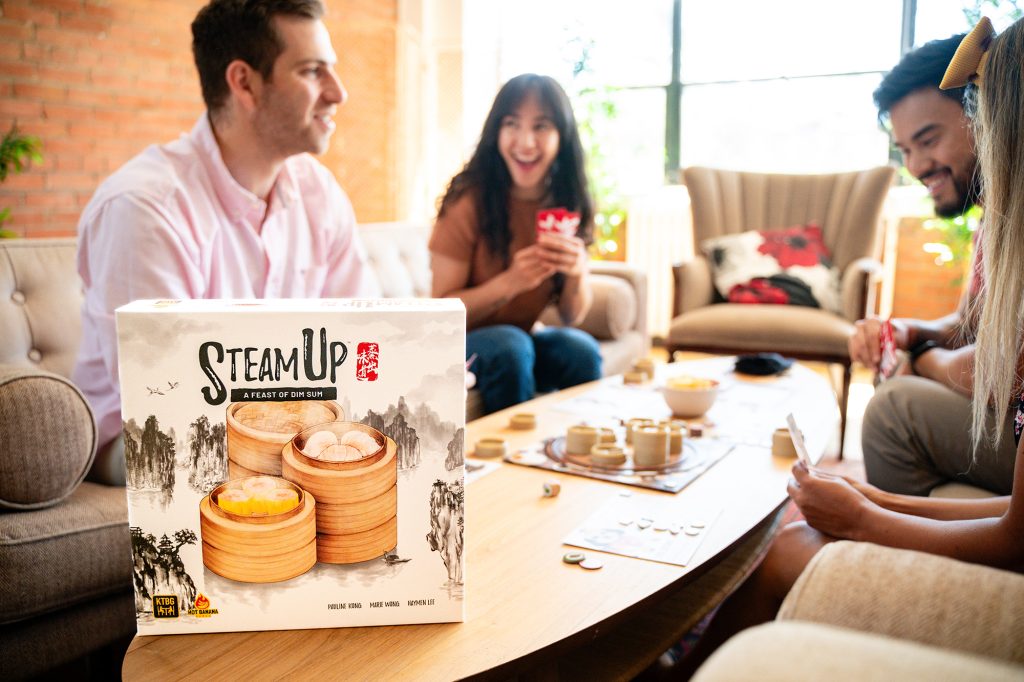
Whenever you pick up a new or familiar board game in anticipation of a gathering with family or friends, do you ever wonder how a board game is brought to life? Just like the seemingly scattered game pieces inside each box, every board game comes together through a whirlwind of ideas, strategies, and emotions. We are thrilled to feature Steam Up, a board game created by BCIT alum Pauline Kong, and share how it developed from concept to final product.
How It All Started: From Mahjong to Modern Play
Pauline’s connection to board games runs deep. Growing up, she could spend hours immersed in her favourite games like Atari, Novus, and Mario Kart. Her first tabletop experience, however, was mahjong—taught by her parents and often played together as a family. As school became more demanding and responsibilities stacked up, the number of evenings spent playing games gradually dwindled.
It wasn’t until years later, after beginning her career in the nursing industry that she was introduced to board games by a friend. What started as a casual pastime soon became something deeper. She quickly discovered the power of board games in helping her destress and forge closer relationships with loved ones. After countless game sessions, an idea emerged—to create a board game of her own, one that emulated the same comfort, joy, and connection she experienced every time she played.
The simple sketch resurfaced memories of weekend mornings spent sharing steaming baskets of dim sum with her parents and friends. Inspired by the nostalgia and warmth of those moments, she wanted to transform a beloved cultural tradition into a tabletop experience for those who also grew up with dim sum and those discovering it for the first time.
What sparked the idea for the game’s concept was a childhood drawing of Pauline’s favourite food: dim sum.
A Game Steeped in Tradition
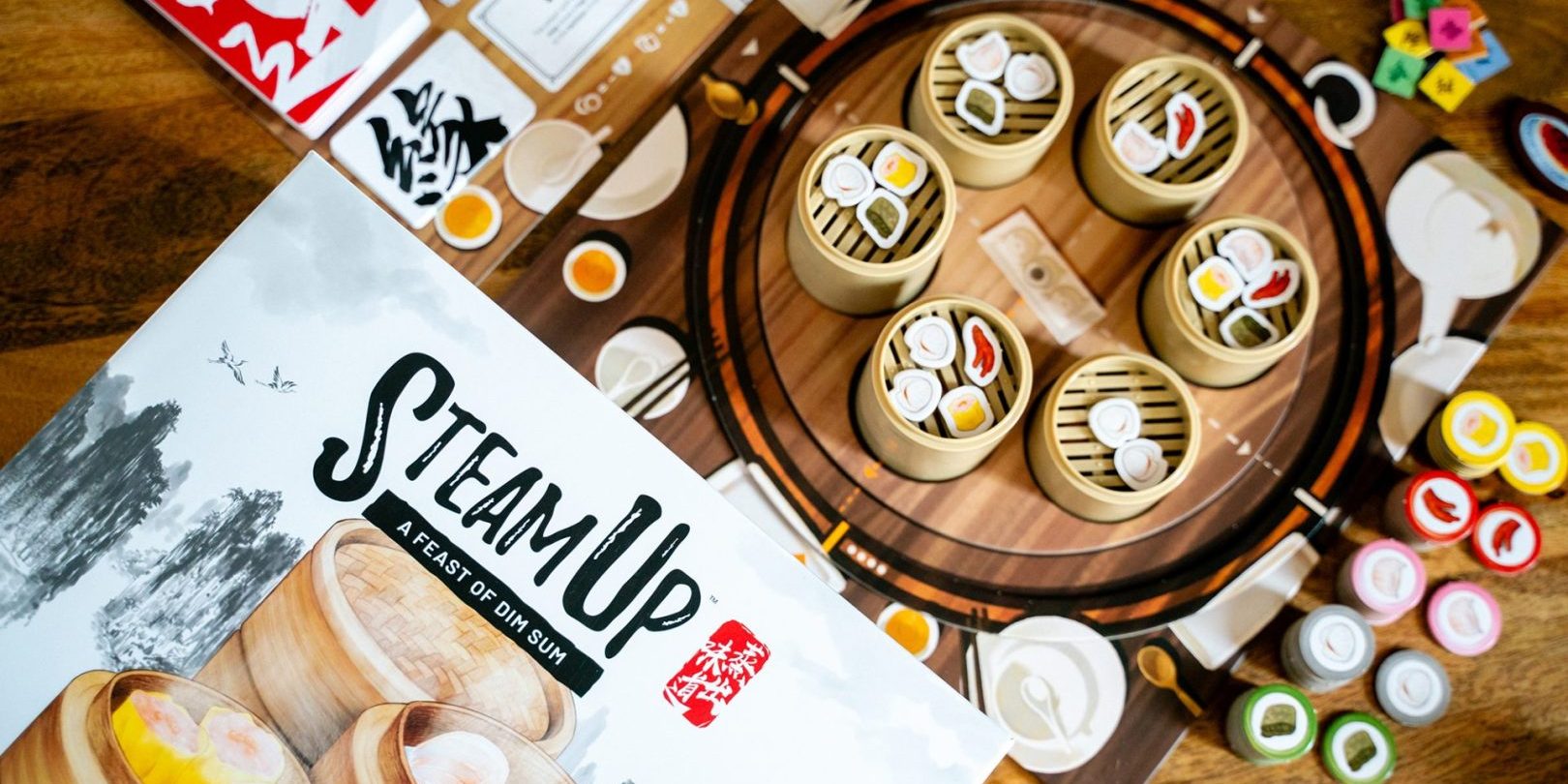
Every carefully designed component of the game takes players on a journey to devour as much dim sum as possible—and to leave with the fullest stomach—at a restaurant nestled in the mountains of a mythical land in the Far East.
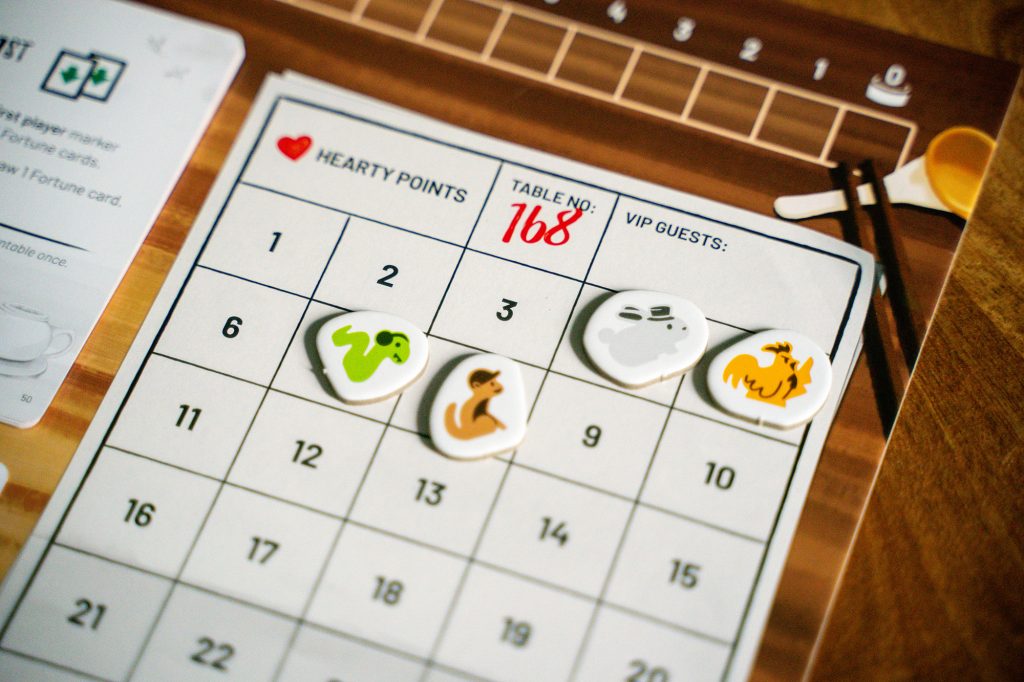
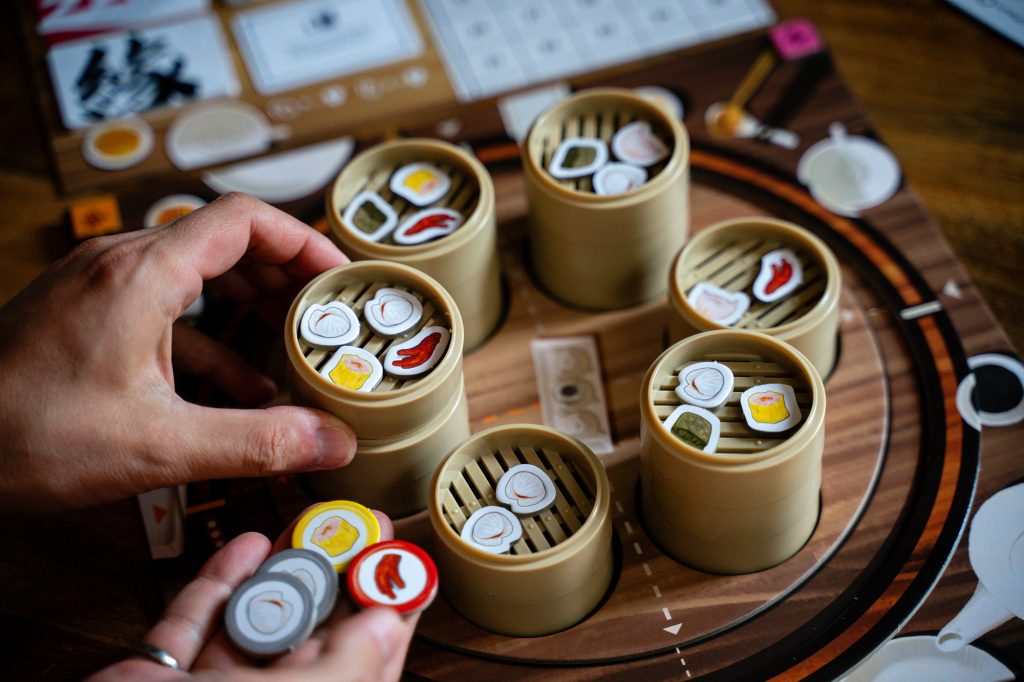
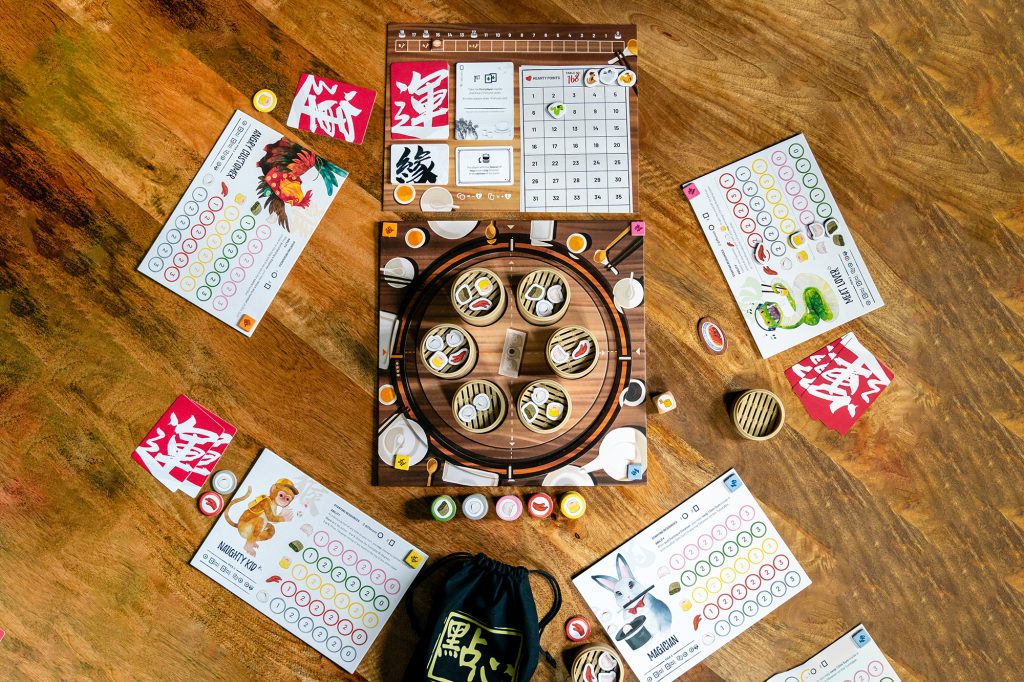
The game draws inspiration from authentic Chinese traditions, weaving cultural elements into every aspect of its design. At its centre is a turntable that mirrors a lazy Susan, the rotating tray used to serve dim sum and encourage sharing. Players gather around it just as they would in a traditional dim sum restaurant. Steam Up features 12 Chinese zodiac animals and five popular dim sum dishes: BBQ meat buns, shrimp dumplings, meat dumplings, phoenix claws, and sticky rice. Players may notice that even the lucky die holds cultural significance, with the number four being purposefully omitted, since the word “four” sounds like the word for “death” in many East Asian cultures.
Dim sum, often translated as “touching of the heart”, captures the very spirit of the game. Players earn “hearty points” to win, celebrating not just strategy, but the joy of shared food and experiences. Every piece is infused with cultural symbolism, evoking nostalgia and connection to one’s roots for dim sum enthusiasts, while sparking curiosity and appreciation for newcomers discovering Chinese cuisine and traditions.
How Steam Up Came To Life
After the initial ideation stage in 2019, it took four years to bring the game to life. Steam Up was a collaborative creation between Pauline, Marie Wong who helped to co-design and develop the game, and Haymen Lee who contributed to the initial game design. For Pauline, it was an arduous but rewarding journey as she had to learn everything from scratch. Through countless hours of research across books, blogs, YouTube videos, and Facebook groups, she immersed herself in the world of game creation, gaining knowledge in everything from establishing a corporation to bookkeeping and accounting.
Beyond the business aspects, she also had to learn and partner with individuals who specialized in fields such as publishing, design, and 3D modelling. After securing funding, she navigated the complex world of manufacturing, game marketing, freight logistics, and distribution to ensure Steam Up reached players around the world.
But along the way, Pauline found a supportive community of board game creators and enthusiasts through Facebook and publishing groups. Members generously shared their insights, offered guidance, and connected her with trusted partners—support that ultimately helped turn her vision into reality.
Dim sum—“touching of the heart”—captures the game’s spirit, where players earn “hearty points” and celebrate shared food and experiences.
How Design Shapes the Experience
One of the most captivating aspects of Steam Up is its enticing visual elements—from miniature 3D steamers and dim sum pieces to striking illustrations and a beautifully crafted rulebook. These details came to life through collaborations with several key contributors. Marie Wong, one of the game’s co-founders with expertise in user interface and user experience (UI/UX), played a central role in refining the playing cards, icons, typefaces, and colour schemes to make the gameplay more intuitive and the instructions easier to follow.
On the graphics side, three illustrators—each with a connection to Chinese culture—brought different elements of the game to life through their unique artistic styles, ranging from water ink to pencil sketching. One illustrator focused on the turntable, which features culturally inspired details such as chopsticks, teapots, and sauce dishes—items typically found on a dim sum table.
Playtesting and Refinement
The most time-consuming stage of the project was the playtesting—especially when the game had to be digitized to overcome the challenges of the COVID-19 pandemic. During this period, multiple online playtests were conducted to evaluate different combinations of character abilities and ensure balanced gameplay. Another challenge was finding the right balance between fun and strategy so the game could appeal to both casual and advanced players. To address these issues, data on game length, player count, game outcomes, and user feedback were carefully documented to guide revisions that improved the game’s clarity and flow.
Through this experience, Pauline learned an important lesson: the product can’t please everyone—and that’s okay. Negative reviews don’t necessarily indicate a bad product; rather, it shows that the game resonates only with the right target audience. Ultimately, the focus should remain on those who truly appreciate and connect with the game.

The Kickstarter Success Story
After the preliminary design and playtesting stages, Steam Up was launched on Kickstarter, an online crowdfunding platform that allows creators to raise funds for their projects directly from the public. Pauline introduced the game through a detailed campaign page featuring descriptions, videos, and product shots, along with a clear funding goal and deadline. On Kickstarter, supporters—known as “backers”—pledge money to help bring projects to life. If the total pledges meet or surpass the funding goal before the deadline, the creator receives the funds to move forward, and backers are often awarded with the finished product. The campaign was widely successful with 8,267 backers raising more than $580,000 CAD to help bring Steam Up to life.
Beyond the Tabletop
Beyond introducing authentic Chinese stories to a global audience, Steam Up has had a deeply personal impact on Pauline and her relationships with loved ones. The game has allowed her to rekindle her bond with her parents through their shared love of games and to grow closer with her nieces by passing down cultural traditions that she cherished as a child. With friends, she uses Steam Up as a fun, engaging way to introduce them to dim sum and inspire them to experience it for themselves.
For Pauline, one of the most rewarding parts of this journey has been hearing from players around the world about how Steam Up has brought back treasured memories, helped them reconnect with their roots, and strengthened their relationships with loved ones. Each story adds to a growing ripple effect—spreading pride in heritage and expanding representation within the board game industry.
What’s Next
Steam Up’s success has revealed a genuine demand for more Asian-themed board games in the global market, inspiring Pauline to continue creating board games that celebrate cultural traditions. The lasting partnerships and valuable lessons gained through Steam Up have become stepping stones for her future projects.
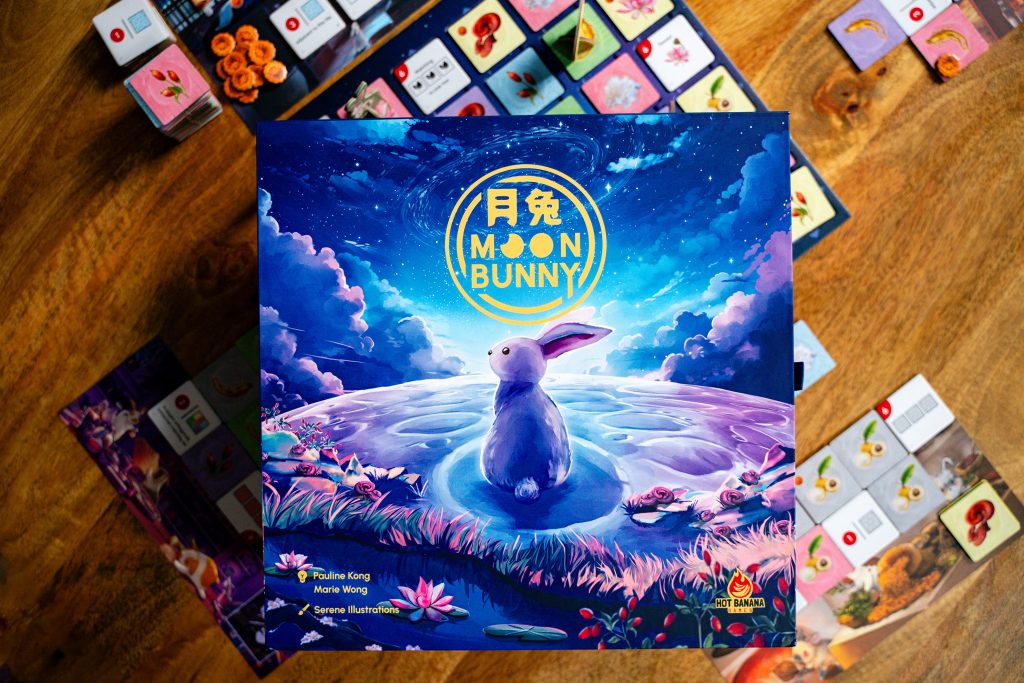
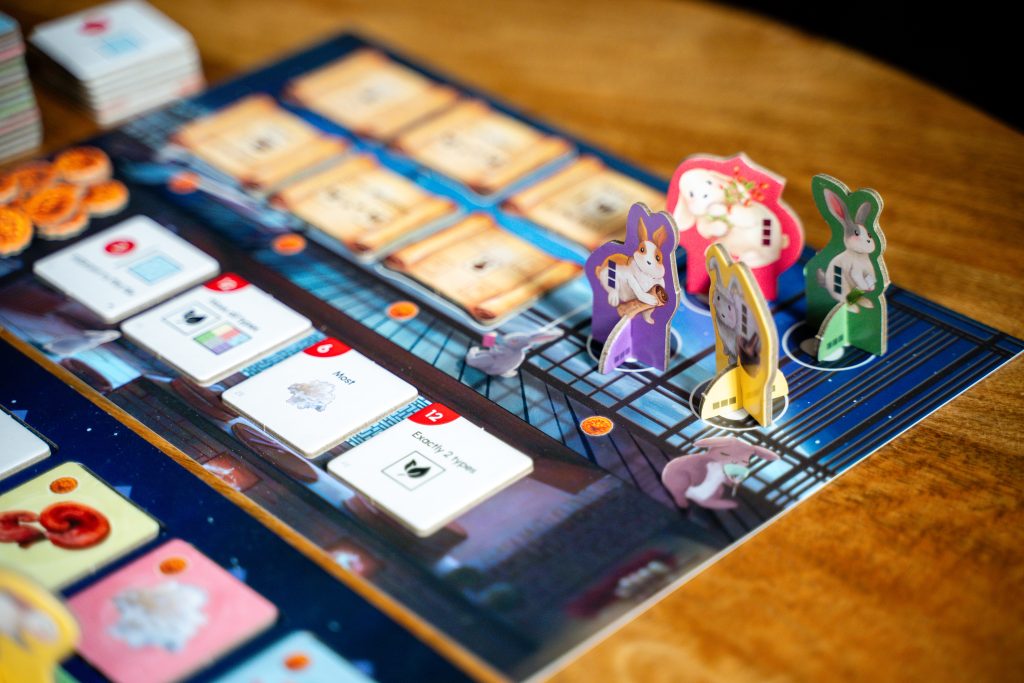
So, what’s next? Pauline believes that one game doesn’t fit all players, and she’s passionate about designing diverse experiences that appeal to players of all ages and backgrounds. This vision led to the creation of Moon Bunny, a board game inspired by Moon Festival folklore, released in September 2025 ahead of the Mid-Autumn Festival. Her next project, Lion Dancer, will launch on Kickstarter in spring 2026, capturing the festive spirit of lion dancing—one of the many traditions celebrated during Lunar New Year.
Ultimately, Steam Up proves that a board game can do more than entertain—it can touch people’s hearts and bring them closer to their culture and loved ones. Each piece tells a story of the care and dedication poured into the project. Individually, they are small fragments of insight and experience; together, they form a story of perseverance, growth, and the joyful celebration of culture and tradition.

A Creator’s Guide: The Four C’s
Creating Steam Up taught Pauline four key lessons—now known as her “Four C’s.”
Creativity
Bring ideas into the world that feel fresh and needed. Pauline believes in identifying what’s missing in the community and creating something that fills that gap:
“Instead of people wanting this product, you want people to need this product.”
Critical Thinking
Regularly evaluate your work to understand what’s effective and what isn’t. Look for ways to refine the experience, turning obstacles into opportunities for improvement and growth.
Communication
Explain your vision clearly—to your audience, collaborators, and stakeholders.
Strong communication includes receiving feedback with openness:
“Are you able to take criticism? Are you able to take on the bad reviews and convert them into something positive?”
Commitment
Stay dedicated through challenges and setbacks. Reconnect with the purpose that motivated you in the beginning, and let that drive carry you forward.